Expected data sets: define and track partner data in one place
Expected data sets are now available in LinkXG. They let you define the exact data points you need from your supply chain partners, assign that definition across your connections, and track fulfilment in one place.
Most companies that buy from a supply network need particular information from their partners: company attributes, product data, or both. Today that requirement usually lives in someone’s head or a spreadsheet, and collecting against it means working through email threads with no reliable view of what has come back and what is still outstanding.
How expected data sets work
An expected data set is a defined list of the data points you require from a partner, tracked against their response. You build a set once, assign it to all of your connected companies or to a chosen selection, and see who has responded, who is still working, and where the gaps are. Where a partner already holds a data point in the network, it is marked as fulfilled automatically, so the set reflects what is already known from the moment you assign it.
Regulatory templates from the underlying text
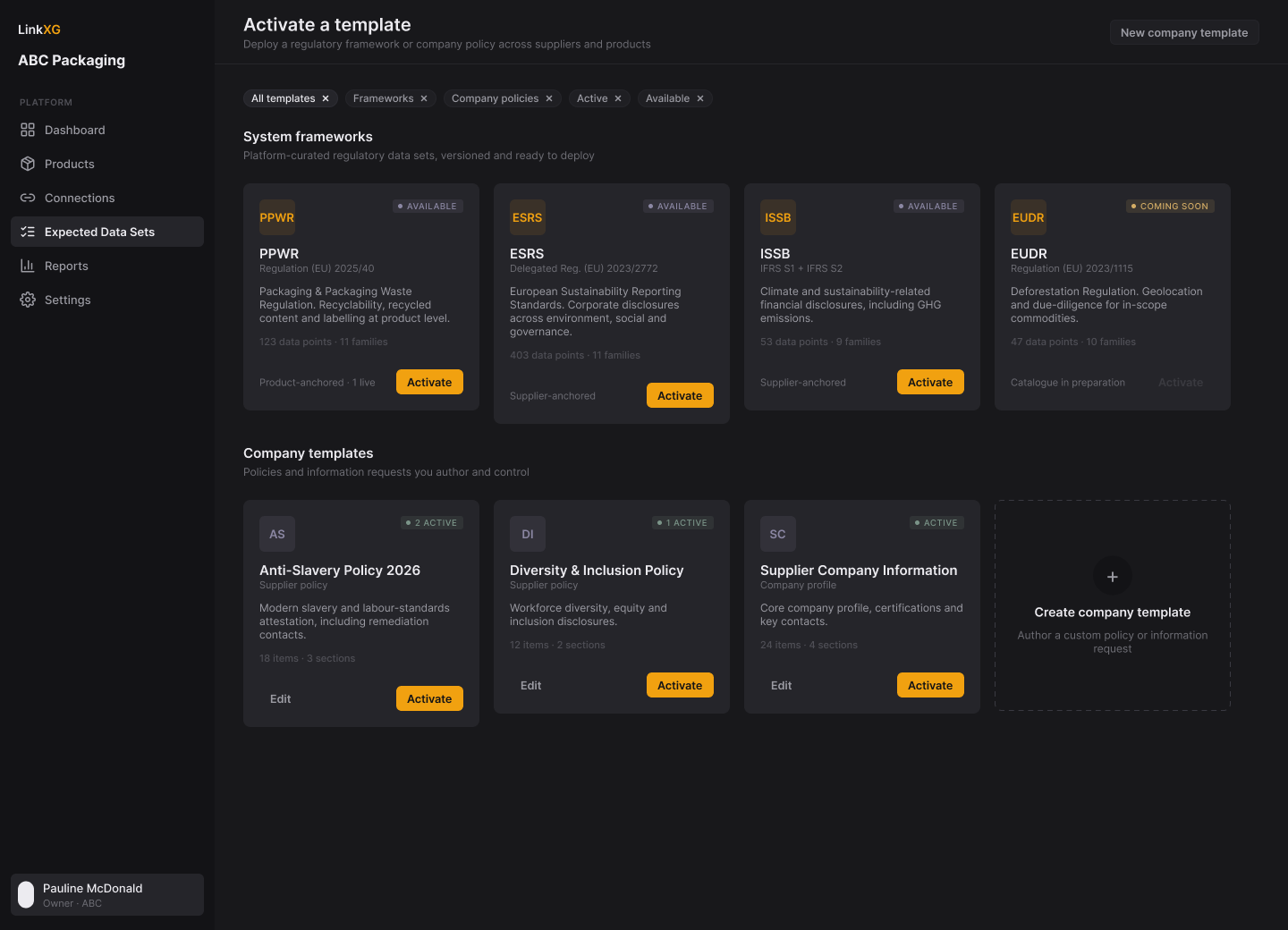
LinkXG curates templates directly from regulatory text, so you do not have to interpret it yourself. The first release covers three frameworks, with the EU Deforestation Regulation and further frameworks to follow.
| Framework | Full name | Status in expected data sets |
|---|---|---|
| PPWR | Packaging and Packaging Waste Regulation | Available now |
| ESRS | European Sustainability Reporting Standards | Available now |
| ISSB | International Sustainability Standards Board standards | Available now |
| EUDR | EU Deforestation Regulation | To follow |
Each template gives you a defined starting point that you can assign as it stands or adapt to your own requirements. The same mechanism applies to commercial and operational data requirements as readily as regulatory ones.
Build your own templates
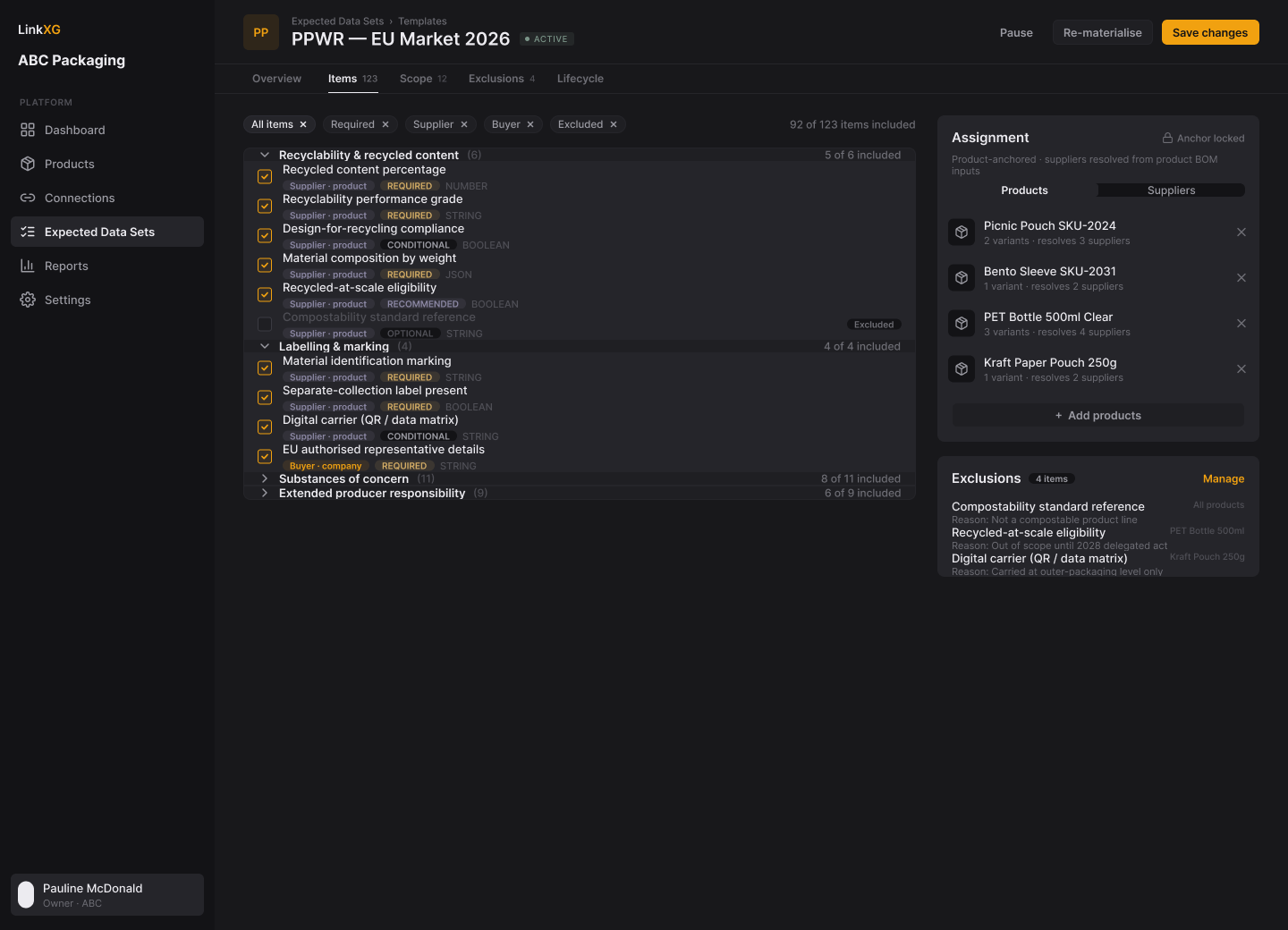
You can build templates from scratch, combining company and product attributes into a single defined set. Save a template for reuse, assign it across your connected companies or to a specific group, and apply the same standard consistently rather than rebuilding the request each time.
Track fulfilment in one dashboard
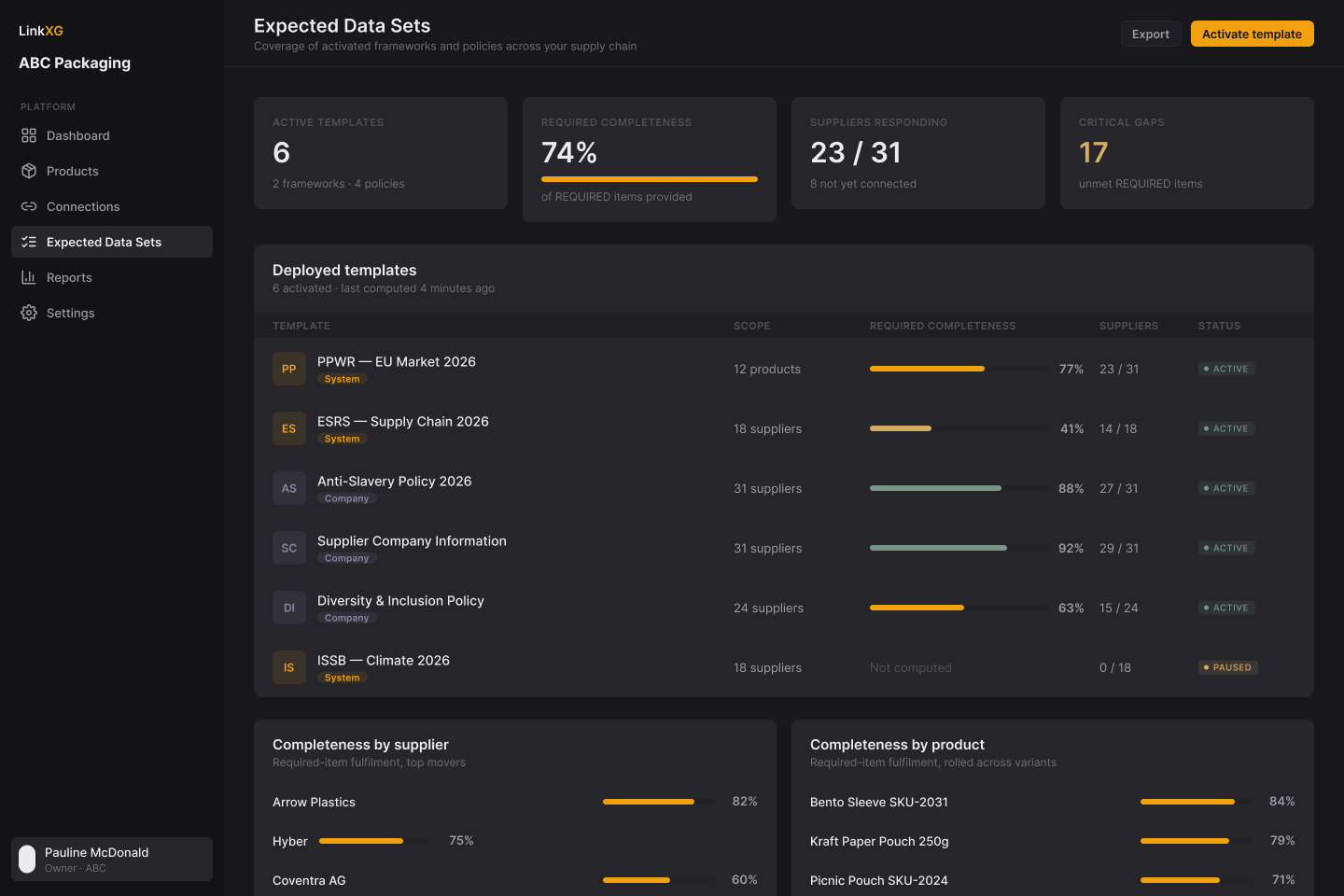
A dashboard reports fulfilment by supplier, product and material, so you can see which requirements have been met and which remain open. Filter to a regulation, a template, or a single partner to locate the precise gaps and prioritise the follow-up that matters.
What suppliers see
Suppliers see exactly what each customer expects of them and respond in place. They can mark an item as in progress and give an expected date, or mark it as will not provide with a reason. Both responses are visible to the requesting customer, so the discussion about data stays on the record rather than in a mailbox. This keeps supplier data management in one shared system rather than across scattered inboxes.
What this means in practice
Expected data sets turn data collection from a spreadsheet-and-email exercise into a tracked requirement on the network. Buyers define what they need once and watch it fill in against every connection. Suppliers answer in place, with their progress and any exceptions on the record. The work of collecting, chasing, and reconciling partner data moves into a single, auditable view.
Expected data sets are available now on LinkXG Core and Enterprise. You can build and assign your first set from the platform, review plans on the pricing page, or read the full reference in the documentation.
Built on shared, current data.
If you are preparing for new obligations, or simply tired of chasing supplier data by email, we would be glad to show you how the network works.